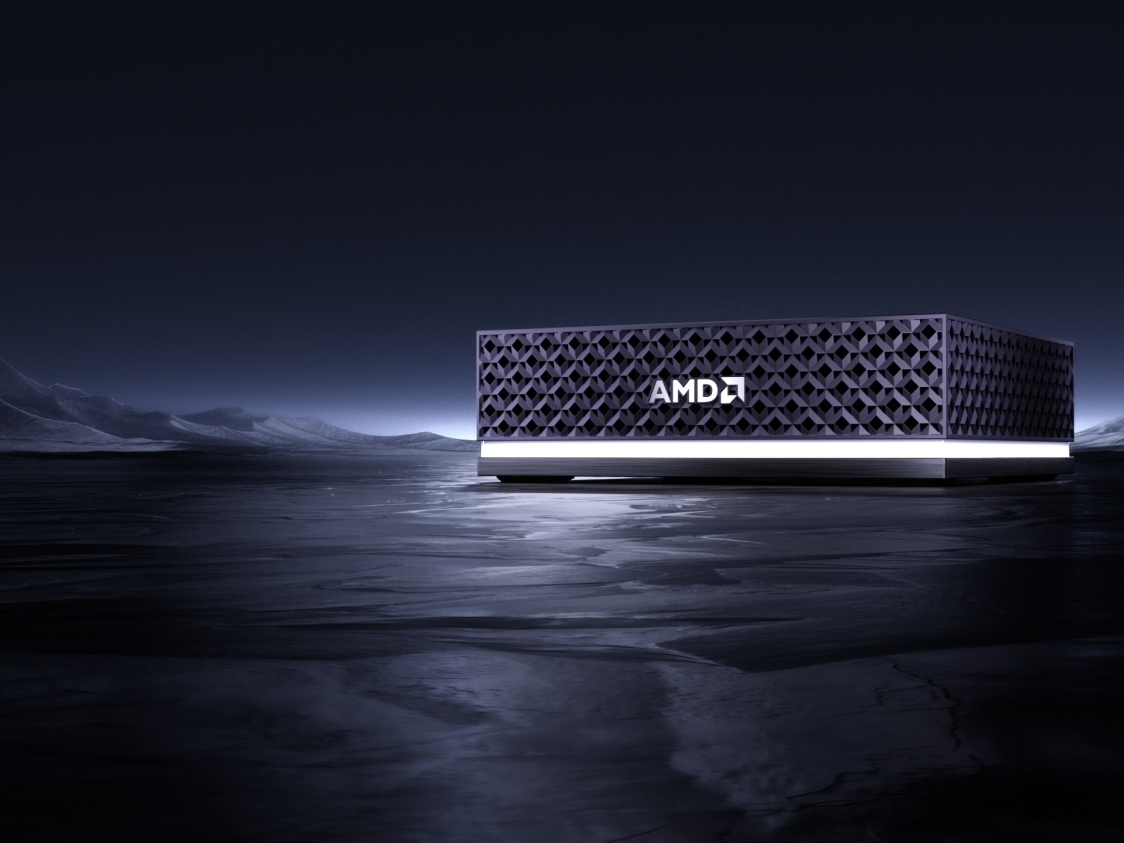
AMD is reportedly preparing to introduce a device that could reshape how personal computers are used in the age of artificial intelligence. Based on newly surfaced close-up images shared by TechRadar, the mini PC known as Ryzen AI Halo features an incredibly compact design small enough to sit comfortably in the palm of a hand yet powerful enough to hint at a much larger ambition.
What immediately stands out is its ultra-small form factor. Unlike most mini PCs that still occupy noticeable desk space, this device is designed with true portability and minimal footprint in mind. Despite its size, it does not sacrifice essential functionality expected from a professional-grade system.
The images reveal that Ryzen AI Halo includes a full range of connectivity options such as USB Type-C, HDMI and Ethernet. This suggests that AMD is not merely showcasing a conceptual prototype but a fully functional system intended for real world use, particularly in development environments.
Built for AI, Not Everyday Computing
Ryzen AI Halo is not aimed at general consumers. Instead, it is better understood as a developer focused system designed specifically for AI workloads.
Built on the Strix Halo platform within the Ryzen AI Max 300 series the device combines a high-performance CPU, integrated GPU and a dedicated neural processing unit (NPU). This architecture enables AI models to run locally on the device, eliminating reliance on cloud-based infrastructure a growing priority in an era where speed, efficiency and data privacy matter more than ever.
This approach reflects a broader industry shift toward “local AI,” where intelligent applications are processed directly on-device rather than remotely.
One of the more surprising aspects of the device is the absence of Windows as a default operating system. Instead, Ryzen AI Halo is expected to run on Linux or specialized development environments tailored for AI workloads.
This decision clearly signals AMD’s focus on technically advanced users who require full control over their systems. It also aligns with ecosystems such as ROCm, AMD’s open platform for high-performance computing and AI development.
Despite its compact size, Ryzen AI Halo does not compromise on internal capability. The system is reported to support up to 128GB of LPDDR5 memory using a unified memory architecture, where both CPU and GPU share the same memory pool.
This design is particularly advantageous for AI workloads, as it allows faster and more efficient data movement. In applications such as large language models or generative AI, this can significantly improve overall performance and responsiveness.
A Glimpse Into the Future of AI Computing
The emergence of Ryzen AI Halo offers a clear signal of where personal computing is heading. While AI processing has traditionally been confined to large scale data centers, it is now steadily moving toward smaller, more accessible devices at the edge.
Although details regarding pricing and wider availability remain unclear, Ryzen AI Halo already demonstrates that the future of AI computing may no longer be defined by size but by efficiency and intelligent integration within increasingly smaller form factors.